
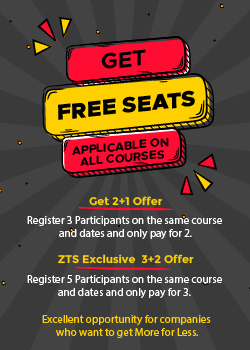
Get Free Seats (Applicable on all courses)

Agile Project Management Training Course

Did you know you can also choose your own preferred dates & location? Customize Schedule
DateVenueDurationFees
24 Aug - 04 Sep, 2026 Dubai 10 Days $11085
14 Sep - 25 Sep, 2026 Cape Town 10 Days $11085
26 Oct - 13 Nov, 2026 Athens 15 Days $14200
09 Nov - 13 Nov, 2026 Houston 5 Days $6835
Did you know you can also choose your own preferred dates & location? Customize Schedule
DateFormatDurationFees
30 Aug - 03 Sep, 2026 Live Online 5 Days $3785
14 Sep - 22 Sep, 2026 Live Online 7 Days $5075
23 Nov - 27 Nov, 2026 Live Online 5 Days $3785
13 Dec - 24 Dec, 2026 Live Online 10 Days $7735

Course Overview

This professional development program in Agile Project Management Training Course is designed for project management professionals including executive managers, change management staff, organizational development staff, business process reengineering consultants, human resources personnel, public servants, and all individuals implementing project plans for broader organizational strategic objectives across software development, product delivery, organizational transformation, and multi sectoral contexts. Spotify’s agile model organizes work into small autonomous squads of 6 to 12 people grouped into tribes with chapters and guilds for skills and knowledge sharing allowing teams to own features end to end while staying aligned to product strategy, supporting continual planning and incremental delivery and enabling rapid adaptation to changing customer needs.​

The curriculum covers introduction including history, approach, principles, philosophy, values, SCRUM pillars and values, link between project management and strategic planning, nexus between agile and budgeting and strategic planning, Agile Manifesto four values and 12 principles, distinction between methodologies, flexibility including project oversight, integration, lateral perspective, aligning agile projects with strategic objectives and building cross functional teams, integral components including SCRUM events, analytical capability, scenario planning, monitoring and evaluation, risk projection, structuring sprint events and using metrics, operational capabilities including real world application, initiation, risk prediction, contingency planning, managing budgets flexibly and building contingency into timelines, project execution including resources, deployment, partnerships, distinguishing agile from waterfall, prioritizing work using value based frameworks and embracing change, rollout including four values and 12 principles, adopting agile mindset, applying agile in VUCA environment, blending approaches and communicating to stakeholders, and implementation including Spotify Model, change assimilation, DSDM framework, assessing readiness, starting with pilot, and measuring transformation success.​

Why This Course Is Required?

Agile structures and strategic value alignment are critical where Spotify’s model organizes work into autonomous squads of 6 to 12 people grouped into tribes with chapters and guilds for knowledge sharing allowing teams to own features end to end while staying aligned to product strategy, supporting continual planning and incremental delivery and enabling rapid adaptation. Faster delivery and productivity improvement demand Agile Project Management Training Course knowledge because ING’s transformation reorganized its Dutch retail bank into about 350 nine person squads in 13 tribes each responsible for specific customer journeys and empowered to make day to day decisions, with ING reporting improved time to market, increased employee engagement, and raised productivity.​

Agile project management professionals must master iterative delivery fundamentals including sprints, incremental planning, continuous releases, and customer feedback integration, understand value driven frameworks including backlog management, prioritization, MVP delivery, and validated learning, and apply cross functional collaboration and strategic alignment methods to gain better time to market, productivity and engagement, strategic execution, and competitive advantage.​

Research demonstrates training is crucial, with ING’s case showing moving from siloed hierarchical structures to cross functional squads requiring critically evaluating existing project processes, identifying bottlenecks, and redesigning ways of working around customer journeys, and trained professionals gain skills to perform gap analyses and challenge legacy processes and propose agile alternatives. Microsoft’s DevOps planning relies on teams owning three week sprints and short range plans with leadership focusing on seasons and long term strategy demanding clear communication and disciplined backlog management, and practitioners who operate within this structure demonstrate value driven mindset and communication skills, while Spotify’s model shows squads choosing their own ways of working and releasing early and often and relying on MVPs and validated learning, providing template for structuring around agile projects.​

Course Objectives

Upon successful completion, participants will have demonstrated mastery of:

  • Learning how to encapsulate Agile Project Management methodology and principles within their organisational environment
  • Gaining insight into primary strategic objectives of the organisation and how these affect value‑adding products and software
  • Discovering how to assimilate prerequisites for implementing Agile project management principles into the local strategic and operational context
  • Learning and practising how to consistently and constructively deliver on the organisation’s primary objectives related to the course content
  • Recognising how to spot and avoid common errors when reviewing existing project management methodologies
  • Acquiring an understanding of the principles, procedures, and protocols for implementing Agile Project Management, including its potential and impact
  • Displaying knowledge and understanding of the main sources of project management methodology and how they streamline organisational efficiency while optimising value extraction
  • Identifying and critically evaluating the main weaknesses of existing project management procedures and protocols in the organisation
  • Understanding the roles, functions, and responsibilities of various actors, organisations, and institutions in the Agile Project Management domain
  • Explain Agile values, principles and delivery modes, and compare them with traditional (waterfall) approaches in terms of risk, flexibility and value delivery.​
  • Plan and run iterative delivery using sprints, backlogs, reviews and retrospectives to achieve continuous value delivery and faster feedback.​
  • Align agile projects with strategic objectives by translating organisational goals into product vision, roadmaps and prioritised backlogs.​
  • Structure teams and work using patterns such as squads, tribes, chapters and guilds so cross‑functional teams can own features end‑to‑end while staying aligned to strategy.​
  • Assess current project management practices, perform gap analysis and recommend agile improvements that enhance time‑to‑market, productivity and engagement.

Master agile project management excellence and drive value-driven delivery success. Enroll today to become a Certified Agile Project Management Professional!

Training Methodology

This collaborative Agile Project Management Training program comprises the following training methods:

The training framework includes:

  • Presentation
  • Assignments
  • Case studies and functional exercises
  • Questionnaires
  • Workshops developing agile planning and execution skills
  • Hands-on exercises practicing sprints and backlogs and retrospectives
  • Practical demonstrations with value prioritization scenarios and transformation planning

This immersive approach fosters practical skill development and real-world application of agile project management principles through comprehensive coverage of iterative delivery, value optimization, and strategic alignment with emphasis on measurable time-to-market and productivity and customer satisfaction.

This program follows the Do-Review-Learn-Apply model with experienced instructors ensuring industry-relevant content through practical case studies and agile transformation examples, creating a structured learning journey that transforms traditional project management approaches into professional agile excellence.

Who Should Attend?

This Agile Project Management Training Course is designed for:

  • Project Management Professionals including Executive Managers and Change Management staff and Organizational Development staff and Business Process Re-engineering consultants and human resources personnel and public servants who want to deepen their expertise
  • All individuals whose responsibilities include implementation of project plans especially for improvement of broader organizational strategic objectives
  • Scrum Masters and Product Owners
  • Team leads and managers
  • Agile practitioners
  • Business analysts
  • Organizational transformation professionals
  • Professionals seeking agile project management certification

Organizational Benefits

Organizations implementing agile project management training will benefit through:

  • Significantly enhanced strategic alignment and value delivery through comprehensive training delivering measurable returns where Spotify’s agile model organises work into small autonomous squads 6-12 people grouped into tribes with chapters and guilds cutting across for skills and knowledge sharing allowing teams to own features end-to-end while staying aligned to product strategy with this structure supporting continual planning and incremental delivery and helping eliminate non-essential work and enabling rapid adaptation to changing customer needs exactly what agile project management seeks to achieve in linking strategy and budgeting and value-driven execution exactly what training teaches
  • Better time-to-market and productivity and engagement through ING’s agile transformation reorganising Dutch retail bank into about 350 nine-person squads in 13 tribes each responsible for specific customer journeys and empowered to make day-to-day decisions with ING reporting this model improved time-to-market and increased employee engagement and raised productivity demonstrating how agile project management practices including short iterations and cross-functional teams and continuous feedback can directly support organisation’s purpose and mission and flexibility in volatile market as organizational benefits highlighted in training
  • Improved continual planning and learning and faster feedback through Microsoft’s Developer Division using planning structure built on three-week sprints and 3-sprint plans and 6-month seasons and 12-month strategies explicitly designed to maximise learning while planning with division shifting from 4-6 month milestones to three-week sprints and from long upfront planning cycles to continual planning and learning enabling faster feedback and more frequent releases and better alignment between project work and strategic objectives validating course content
  • Strengthened competitive advantage through comprehensive understanding of Agile Manifesto values and principles, iterative delivery, cross-functional teams, and continual planning and learning that enable superior agile project management excellence

Studies show that organizations implementing comprehensive agile project management training achieve significantly enhanced delivery outcomes as research confirms squad-tribe-chapter-guild structure enables end-to-end ownership and rapid adaptation, better organizational outcomes through agile transformation evidence demonstrating improved time-to-market and increased employee engagement and raised productivity, and improved competitive positioning as continual planning and learning enables faster feedback and more frequent releases while organizations benefit from training employees on definition and importance of Agile Project Management, learning how Agile Project Management principles facilitate attainment of organization’s core purpose and values and mission and vision, focusing efforts on quality and product flexibility, improving productivity by teaching staff about critical necessity to remain aware of emerging market perceptions and trends, achieving improved synergy elevating employee morale and increasing productivity, and critically conducting gap analysis and performance audit of organizational capacity.

Empower your organization with agile project management expertise. Enroll your team today and see the transformation in delivery speed and value optimization!

Personal Benefits

Professionals implementing agile project management training will benefit through:

  • Deeper improved efficiency and critical evaluation of current methods through ING’s case showing moving from siloed hierarchical structures to cross-functional squads requiring critically evaluating existing project processes and identifying bottlenecks and redesigning ways of working around customer journeys and strategic objectives with professionals trained in agile project management gaining skills to perform similar gap analyses in their own organisations and challenge legacy processes and propose agile alternatives improving productivity and value delivery
  • Enhanced stronger planning and communication and value-driven mindset through Microsoft’s DevOps planning model relying on teams owning their three-week sprints and short-range plans with leadership focusing on seasons and long-term strategy demanding clear communication and disciplined backlog management and continuous alignment with practitioners who can operate confidently within this structure linking sprint-level work to seasonal and strategic goals demonstrating value-driven mindset and communication skills agile project management roles require
  • Stronger ability to structure around value and autonomy through Spotify’s scaling model demonstrating squads choosing their own ways of working and releasing early and often and relying on MVPs and validated learning to refine features while Product Owners prioritise work and agile coaches facilitate continuous improvement providing concrete template for how organisations can structure around agile projects rather than rigid functions
  • Advanced expertise in sprint planning, backlog management, and iterative delivery
  • Enhanced career prospects and marketability in agile project management, product ownership, scrum mastery, and organizational transformation sectors with professionals gaining skills in value-driven delivery, cross-functional collaboration, and strategic alignment
  • Ability to improve performance through higher efficiency and greater worker productivity by being aware of implications of agile project management
  • Skills to engage in constructive discussions resulting in improved organizational capacity and overall communication
  • Knowledge to contextualize and assimilate practical understanding of impact of application of agile project management principles
  • Capability to display knowledge and understanding of main principles pertaining to Agile Project Management
  • Understanding to recognise roles and functions and responsibilities of various actors in implementation of Agile Project Management methodology
  • Expertise to identify and critically evaluate main weaknesses of existing project management processes and procedures
  • Proficiency to work through hands-on role-plays and case studies to gain skills needed to effectively utilize Agile Project Management

Course Outline

MODULE 1: INTRODUCTION TO AGILE PROJECT MANAGEMENT

  • History
  • Approach
  • Principles
  • Philosophy
  • Values
  • The pillars of SCRUM and SCRUM values
  • Link between Project Management and Strategic Planning
  • Understanding the nexus between Agile, Budgeting & Strategic Planning
  • Principles of Agile Project Management
  • Brief overview of the Agile Manifesto’s four values and 12 principles as the foundation for all agile approaches​
  • Simple distinction between agile methodologies (Scrum, Kanban, XP) and how they share common values but differ in ceremonies and practices​

MODULE 2: FLEXIBILITY WITH AGILE PROJECT MANAGEMENT

  • Project Oversight
  • Project Integration
  • Organization-wide lateral perspective
  • Influencing
  • Agile Management
  • Potential
  • Context
  • The intercept between Agile Project Management, Strategic Planning & Budget (Case Study)
  • Aligning agile projects with strategic business objectives by translating organizational goals into product vision and user stories​
  • Building cross-functional teams with business stakeholders, developers and domain experts to reduce feedback loops​

MODULE 3: AGILE: INTEGRAL COMPONENTS

  • SCRUM Events
  • SCRUM event setup
  • Analytical Capability
  • Scenario Planning
  • Extrapolation using Statistical juxtaposition
  • Agile Business: Monitoring & Evaluation
  • Agile Risk Projection & Planning
  • Structuring sprint events: planning, daily standup, review and retrospective with clear time-boxes and outcomes​
  • Using data and metrics (velocity, cycle time, burndown) to inform release planning and risk decisions​

MODULE 4: AGILE: OPERATIONAL CAPABILITIES

  • Using Agile in the real world
  • Application of Agile Project Management Principles
  • Project Initiation
  • Risk Prediction & Contingency Planning
  • Process
  • Evaluation
  • Timeline
  • Budget
  • Managing agile budgets flexibly by allocating funds to value streams or products rather than detailed fixed plans​
  • Building contingency into timelines using historical velocity data instead of traditional risk buffers​

MODULE 5: AGILE PROJECT EXECUTION

  • Realizing and Harnessing Resources
  • Resource Deployment
  • Exploring Partnerships
  • Developing Networking
  • Agile and susceptibility to change
  • Distinguishing Agile from Waterfall
  • Assignment: Using Agile Project Management to predict & prepare for change: Pros & Cons
  • Case Study: Contextualizing and adapting Agile Project Management: A systemic approach
  • Prioritizing work using value-based frameworks (MoSCoW, Weighted Shortest Job First) so highest-impact items are done first​
  • Embracing change as normal by keeping the product backlog dynamic and re-prioritizing after each sprint​

MODULE 6: AGILE PROJECT MANAGEMENT ROLLOUT

  • The four values of the Agile Manifesto
  • 12 principles of the Agile Manifesto
  • Adopting an Agile mindset
  • Initiation
  • Applying Agile in a VUCA Environment
  • Blending Project Management Approaches
  • Case Study: Resource Co-ordination and Deployment using Agile (An Integrated Approach)
  • Using hybrid or blended approaches when agile alone doesn’t fit (for example, combining agile delivery with waterfall governance)​
  • Communicating clearly to stakeholders how agile differs from traditional project management: iterative delivery, working software, customer collaboration​

MODULE 7: AGILE PROJECT MANAGEMENT IMPLEMENTATION

  • The Spotify Model
  • Assignment: Critical Analysis: Kanban, XP & Lean
  • Change Assimilation & Integration using Agile
  • Integrating Situation Specific Requirements
  • Case Study Construction: Mapping Reality
  • Implementation & Rollout Readiness Questionnaire
  • The DSDM Agile Project Management Framework
  • Assessing organizational readiness by evaluating leadership support, team capability, infrastructure and cultural openness​
  • Starting with a pilot project on a small, high-impact team to build confidence and learn before scaling organization-wide​
  • Measuring agile transformation success with leading indicators (velocity, cycle time, deployment frequency, team morale) not just project delivery dates

Real World Examples

Spotify – squads, tribes, chapters, and guilds enabling continuous, value-driven delivery

Implementation: Spotify’s scaling model introduces squads as cross functional teams owning specific parts of user experience and tribes as groups of related squads and chapters as discipline based communities and guilds as voluntary communities of practice, with squads choosing their own ways of working and releasing early and often and relying on MVPs and validated learning while Product Owners prioritize work and agile coaches facilitate continuous improvement. Squads consist of 6 to 12 people, are cross-functional, carry a feature or product end-to-end, and choose process and cadence themselves, with each squad having a mission to accomplish and being free to choose agile methodology and applying the Most Viable Product technique to release early and often.​

Results: The model creates squad autonomy and end-to-end ownership where squads are autonomous, self-organizing, and self-managing with full method choice, while tribes group 3 to 5 squads with a tribe lead for coordination, chapters are professional communities ensuring standards and knowledge sharing with a chapter lead, and guilds are voluntary communities promoting exchange and reuse. Squads have an agile coach that helps improve their way of working, a product owner who defines vision, and direct contact with stakeholders, with this structure supporting iterative delivery, continual planning, and close alignment with product value, enabling continuous value-driven delivery through autonomous squads releasing early and often and rapid adaptation through continual planning and incremental delivery.​

ING Bank – agile project structures improving time to market and engagement

Implementation: ING reorganized its bank into about 350 squads of around nine people grouped into 13 tribes each centered on specific customer journeys such as digital payments or savings, and according to ING executives this model improved time to market, boosted employee engagement, and increased productivity by empowering teams, shortening decision paths, and aligning work with customer needs. Squads typically contain nine people cross disciplinary covering front end, back end, operations, marketing, analytics, data architecture, and other skills, with agile coach coaching individuals and squads and chapter developing expertise across squads.​

Results: The reorganization comprising about 350 nine person squads in 13 tribes improved time to market, boosted engagement, and increased productivity, with teams empowered to make decisions quickly while tribe leads coordinate to ensure alignment with strategic goals and squads maintain autonomy. Squads own specific customer journeys from start to finish with full autonomy to make decisions and prioritize tasks, with agile coaches and chapter leads supporting squads in adopting practices and managing backlogs and continually improving, and short iterations, cross functional teams, and continuous feedback directly supporting organization’s purpose and flexibility in volatile market.

Microsoft – agile planning structure enabling continual learning and faster delivery

Implementation: Microsoft’s DevOps planning breaks planning into sprints of 3 weeks, plans of 3 sprints, seasons of 6 months, and strategies of 12 months, with engineers owning sprints and plans while leadership focuses on seasons and strategy, and the company moved from 4 to 6 month milestones and long planning cycles to three week sprints and continual planning and learning. Microsoft planning helps maximize learning with teams able to get feedback, find out what customers want, and implement requests quickly, with teams implementing bug cap calculated by formula number of engineers times 5 so if bug count exceeds cap they must fix bugs before new features.​

Results: The Developer Division moved from releasing software every 2 to 3 years to working in three week sprints across roughly 6,000 people, with entire division operating on three week sprint schedule and sprints becoming heartbeat of organization. The shift from 4 to 6 month milestones to 3 week sprints and from long upfront planning to continual planning enabled faster feedback and more frequent releases and better alignment between project work and strategic objectives, with features shipping every sprint instead of once a year, enabling faster feedback through three week sprints, strategic alignment through multi level planning hierarchy, and continuous value delivery through 6,000 people aligned on sprint heartbeat.​

Be inspired by leading agile project management achievements. Register now to build the skills your organization needs for value-driven delivery and transformation excellence!

Frequently Asked Questions?

4 simple ways to register with Zoe Talent Solutions:

  • Website: Log on to our website www.zoetalentsolutions.com. Select the course you want from the list of categories or filter through the calendar options. Click the “Register” button in the filtered results or the “Quick Enquiry” option on the course page. Complete the form and click submit.
  • Telephone: Call us on +971 4 558 8245 to register.
  • E-mail Us: Send your details to info@zoetalentsolutions.com
  • Mobile/Whatsapp: You can call or send us a message on Whatsapp on +44 20 4586 0412 or +971 4 558 8245 to enquire or register.
    Believe us we are quick to respond too.

Yes, we do deliver courses in 17 different languages which includes English, Arabic, French, Portuguese, Spanish are to name a few.

Our course consultants on most subjects can cover about 3 to maximum 4 modules in a classroom training format. In a live online training format, we can only cover 2 to maximum 3 modules in a day.

Our live online courses start around 9:30am and finish by 12:30pm. There are 3 contact hours per day. The course coordinator will confirm the Timezone during course confirmation.

Our public courses generally start around 9:30am and end by 4:30pm. There are 7 contact hours per day. 

A ‘Remotely Proctored’ exam will be facilitated after your course.
The remote web proctor solution allows you to take your exams online, using a webcam, microphone and a stable internet connection. You can schedule your exam in advance, at a date and time of your choice. At the agreed time you will connect with a proctor who will invigilate your exam live.

A valid ZTS ‘Certificate of Training’ will be awarded to each participant upon successfully completing the course.

×

Courses with Exclusive Offers Browse Courses

Download PDF

Chat with a Consultant