
Liquefied Natural Gas (LNG) Value Chain
 Print
Print Download pdf
 Download Brochure
 Register
| Date | Format | Duration | Fees | |
|---|---|---|---|---|
| 20 May - 24 May, 2024 | Live Online | 5 Days | $2250 | Register |
| 19 Jun - 21 Jun, 2024 | Live Online | 3 Days | $1750 | Register |
| 01 Jul - 05 Jul, 2024 | Live Online | 5 Days | $2250 | Register |
| 16 Sep - 18 Sep, 2024 | Live Online | 3 Days | $1750 | Register |
| 18 Nov - 22 Nov, 2024 | Live Online | 5 Days | $2250 | Register |
| 16 Dec - 27 Dec, 2024 | Live Online | 10 Days | $4495 | Register |
| Date | Venue | Duration | Fees | |
|---|---|---|---|---|
| 06 May - 10 May, 2024 | Barcelona | 5 Days | $5695 | Register |
| 27 May - 31 May, 2024 | Dubai | 5 Days | $4750 | Register |
| 10 Jun - 12 Jun, 2024 | Cape Town | 3 Days | $4100 | Register |
| 10 Jun - 14 Jun, 2024 | Dubai | 5 Days | $4750 | Register |
| 22 Jul - 26 Jul, 2024 | Cairo | 5 Days | $4950 | Register |
| 22 Jul - 26 Jul, 2024 | Dubai | 5 Days | $4750 | Register |
| 12 Aug - 16 Aug, 2024 | Dubai | 5 Days | $4750 | Register |
| 04 Sep - 06 Sep, 2024 | Seoul | 3 Days | $4250 | Register |
| 09 Sep - 13 Sep, 2024 | Dubai | 5 Days | $4750 | Register |
| 28 Oct - 01 Nov, 2024 | Dubai | 5 Days | $4750 | Register |
| 04 Nov - 08 Nov, 2024 | Dubai | 5 Days | $4750 | Register |
| 02 Dec - 13 Dec, 2024 | Kampala | 10 Days | $9150 | Register |
| 23 Dec - 27 Dec, 2024 | Dubai | 5 Days | $4750 | Register |
Book Classes Now

Course Overview
Liquified natural gas (LNG) is natural gas cooled down to liquid form for ease of storage and transport under non-pressurised conditions. This is undertaken because of the various hazards that could occur if kept under pressurised conditions in the gaseous state. The entire process from gas to liquid conversion and then transfer to areas for storage is a complex process requiring close supervision.
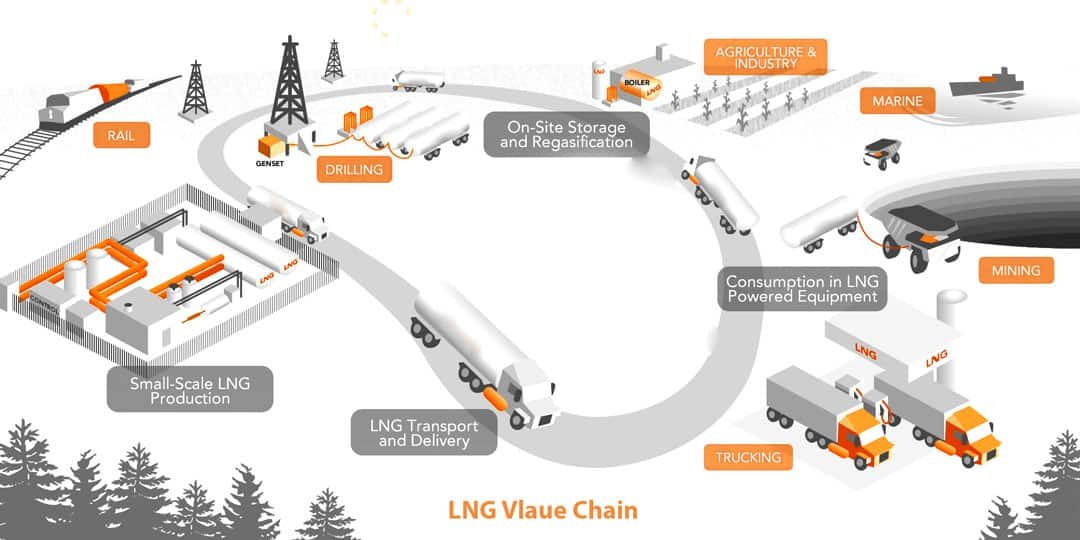
The equipment used in such processes is complex and requires expert skill for seamless operation. The entire process from start to end is termed as the Liquified Natural Gas value chain and consists of key components such as exploration, development, production, gas processing, liquefaction, transport, regasification, distribution and transport as well as marketing and sales.
This Liquefied Natural Gas (LNG) Value Chain Course by Zoe Talent Solutions will empower you with a comprehensive understanding of the entire LNG value chain. Through this course, you will gain all the knowledge required for executing or overseeing execution of all functions involved in transforming natural gas to a liquified form for storage and distribution to consumers.
This LNG training course will help you assume higher roles and responsibilities in any area of specialisation and not limit any growth opportunities. This training course will provide you with all the information and knowledge required to build a fruitful, successful career in this industry.
Course Objectives
The primary objective of this training course is to empower professionals with—
• comprehensive understanding and information about the LNG value chain
• the required knowledge and confidence to perform or oversee any function in the LNG (Liquified Natural Gas) value chain training
• the necessary skill, confidence and experience to train other professionals on various aspects of the LNG value chain training
• the required perspective and foresight to review current functions of the organisations and identify and correct gaps in operations
• the skill and capabilities to apply advanced concepts and techniques to enhance LNG operations
• the ability to contribute to organisational growth and development through reduced costs, faster and more efficient operations, greater machine life, etc.
• the information and exposure to understand possible risks and challenges and implement systems to address these to prevent a negative impact on the organisation
• the flexibility and dynamism to change roles and responsibilities across any function or department of the supply chain (Oil & Gas Industry), thereby inviting additional growth opportunities in the organisation
• knowledge and understanding of all aspects of LNG formation and distribution to connect and predict challenges in other departments before implementing changes in one’s department
• the experience and knowledge to ensure employee health and safety as well as adherence to required standards for safety and operations
Training Methodology
Zoe Talent Solutions customises its training courses as per the requirements and professional backgrounds of the training audience. Thus, before the commencement of each session, the content is thoroughly reviewed and changes are made, if necessary. The training is delivered by experienced professionals from the relevant domain, using detailed audio-visual presentations for ease of reference.
The trainer also assigns sample projects and tasks to help participants experience real scenarios and put their training knowledge to practical use. Trainees are also encouraged to share related experiences and issues they face at work, which are then discussed with the rest of the group.
This unique and interactive format of training is followed by Zoe Talent Solutions for all its courses and is called the Do–Review–Learn–Apply Model.
Organisational Benefits
By professionals undertaking this training course, their organisations will derive the following benefits:
• Better management of operations through the (LNG) Gas value chain by trained and experienced professionals
• Application of advanced concepts and techniques for enhancement of LNG functions and operational excellence
• Regular training and upskilling of other employees on various functions of the LNG value chain
• More effective risk assessment and management, thereby increasing organisational credibility
• Better maintenance of equipment, thereby reducing costs and expenses and increasing profits
• Organisational development because of reduced costs, increased profits and increased organisational credibility
• Increased investments because greater prospects for the organisation to be at a competitive advantage
• Cross-training and cross-skilling of staff ensuring that operations are not impacted because of staff non-availability
• Adherence to all required standards of operations and safety
Personal Benefits
Professionals will derive the following benefits from this LNG training course:
• Detailed understanding and knowledge of the LNG value chain
• Increased skill and capabilities to work in any function of the LNG value chain, thereby increasing opportunities for progression
• Greater confidence and exposure to train other professionals on various aspects of the LNG value chain
• Enhanced knowledge and understanding of required standards and benchmarks for operation, ensuring that one’s organisation is meeting these
• Enhanced perspective and analytical skills to foresee risks and challenges and address these before they affect the organisation in a major way
• Greater ability to contribute to organisational growth and development through increased credibility, reduced costs, greater profits and more investments
• Increased understanding and awareness of advanced techniques and concepts to improve operations in one’s organisation
• Enhanced skill set and professional portfolio inviting opportunities from other organisations, fostering career growth and development within and outside one’s organisation
• A sense of pride contributing to employee health and safety through safe and organised practices within one’s organisation
Who Should Attend?
• Senior management of an organisation who play a key role in strategic decisions for any process enhancement in the organisation
• Engineers executing operations and working with equipment in any function within the LNG value chain
• Managers responsible for overseeing end-to-end operations of the LNG value chain
• Vendors and suppliers involved at some of the other stages of the LNG value chain
• Financial advisors or analysts responsible for checking the financial performance of all activities across the LNG value chain
• Compliance officers responsible for ensuring adherence to standards of safety and operations
• Any other professional interested in knowing more about the LNG value chain
Course Outline
The course covers the following areas important to understand the LNG value chain:
Module 1 – Overview of LNG
- History
- Composition
- Contribution to the global economy
- Uses
Module 2 – Sectors in the LNG Value Chain
- Exploration and development
- Production
- Gas processing
- Liquefaction
- Transport
- Regasification
- Distribution and transport
- Marketing and sales
Module 3 – Key Components of the LNG Value Chain
- Gas field
- Liquefaction plant
- LNG carriers
- Receiving and re-gasification terminal
- Storage
Module 4 – Gas Policy and Regulatory Framework
- National gas policy
- Gas act
- Gas master plan
Module 5 – Features of an Effective Policy and Regulatory Framework
- Effective project development and operation
- Transparency
- Minimum complexity
- Monetary policy
- Facilitation of local gas utilisation projects/infrastructure development
- Economic/social development outcomes
- Stakeholder consultation
Module 6 – Success Factors of LNG Development
- Government support
- Geotechnical data
- Focus on safety
- Qualified contractors
- Accurate agreements
Module 7 – Environmental Impacts of LNG Facilities
- Threats to aquatic/shoreline environments
- Marine environmental impacts
- Hazardous/Harmful material emission
Module 8 – Risk Management in LNG
- Risk structure
- Risk management methodologies
- Types of risks
Module 9 – Key Issues Facing LNG Industry Decision Makers
- Security and safety
- Need to streamline permits
- Siting, land use and environmental issues
- National, regional and local economic benefits
- Gas quality/LNG interchangeability
- Return on investment/financing
- Sustainable development
- Technology innovation
- Communication/public
- understanding