
Consumption Tax
 Print
Print Download pdf
 Download Brochure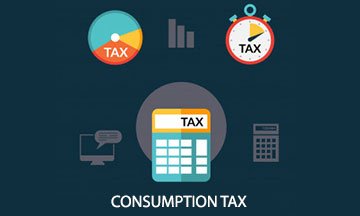
 Register
| Date | Venue | Duration | Fees | |
|---|---|---|---|---|
| 20 May - 24 May, 2024 | Dubai | 5 Days | $4750 | Register |
| 24 Jun - 28 Jun, 2024 | Dubai | 5 Days | $4750 | Register |
| 09 Jul - 11 Jul, 2024 | Riyadh | 3 Days | $4100 | Register |
| 29 Jul - 02 Aug, 2024 | Dubai | 5 Days | $4750 | Register |
| 12 Aug - 16 Aug, 2024 | Dubai | 5 Days | $4750 | Register |
| 02 Sep - 06 Sep, 2024 | Dubai | 5 Days | $4750 | Register |
| 28 Oct - 01 Nov, 2024 | Dubai | 5 Days | $4750 | Register |
| 11 Nov - 15 Nov, 2024 | Dubai | 5 Days | $4750 | Register |
| 09 Dec - 13 Dec, 2024 | Dubai | 5 Days | $4750 | Register |
Book Classes Now
Course Overview
A consumption tax is a tax that is claimed by a federal authority on the purchase of any (most) good or service. A consumption tax can also refer to a taxing system as a whole in which individuals are taxed based on how much they consume instead of how much they put into the economy (i.e. income tax).
Practically every country in the world applies a consumption tax to the sales of goods and services. Consumption taxes can take the form of sales taxes, tariffs, excise, and other taxes on goods and services consumed. These taxes are borne by customers who pay a higher retail price for the good or service.
The final price includes the consumption tax, which is gathered by the seller and forwarded to the applicable federal or local authorities. Consumption taxes are mostly levied at different rates for different types of commodities, generally according to perceptions of whether a commodity is considered a basic necessity or a luxury item.
What are the different types of “Consumption Taxes”? There are various consumption taxes and they are known by different names depending on the country in question. It can be a fixed rate applied to each sale or a percentage of the total value, depending on the governing laws in the area of business.
Each type requires something different from the business owner, but the bottom line is that the end customer pays the tax. Because they are the ones consuming the end product, the ‘consumption’ tax is mostly absorbed by the end-users.
This Zoe training course will empower you with knowledge on how to prepare sales invoices and credits with and without discounts and sales tax, recognise the elements of an invoice, and understand the impact of consumption taxes on sales transactions.
Course Objectives
Upon finishing this Consumption Tax course effectively, participants will be able to:
- Describe the principles of consumption tax
- Calculate the consumption tax
- Explain the importance of an invoice and what details you will find on an invoice
- Learn how to prepare and read credit notes
- Describe the main details of a statement and its purpose
- Carry out cross totting exercises
- Describe the purchasing process and documents involved
- Understand how to create and read a purchase invoice
- Carry out sample creditor reconciliations
- Evaluate case studies with different tax laws in various regions
Training Methodology
This is a collaborative Consumption Tax training program and will comprise the following training approaches:
- Lectures
- Seminars & Presentations
- Group Discussions
- Assignments
- Case Studies & Functional Exercises
Similar to all our courses, this program also follows the ‘Do-Review-Learn-Apply’ model.
Organisational Benefits
Enterprises who nominate their employees to partake in this Consumption Tax course can benefit in the following ways:
- Obtain a customised and all-inclusive consumption tax program with features best suited to address your organisation’s needs
- Produce a detailed international consumption tax profile for your organisation
- Save on legal expenses risen due to consumption tax violations
- Ensure that your company is running with the most streamlined processes related to consumption tax
- Employ the right people to ensure that the consumption tax policies are implemented properly
Personal Benefits
The partakers of this Consumption Tax course can benefit in the following ways:
- Explain the factors that drive the need for consumption tax, and understand the consequences of breaching these laws in a highly legalised world
- Prevent your company from the probable issues faced due to improper consumption tax management
- Create strategies for implementing consumption tax policies including specific tools and technologies, and then monitoring and training of these policies to build an effective consumption tax compliance program
- Benefit from the extensive range of content created by prominent tax experts from around the world
Who Should Attend?
This Consumption Tax course would be suitable for:
- Bookkeepers
- Accountants
- Tax advisers
- General tax practitioners
- Tax practitioners in advisory firms
- Beginners in tax commercial and trade industries
- Government officials
- In-house tax directors/managers
- Tax regulation bodies
Course Outline
MODULE 1: INTRODUCTION
- What is Sales Tax?
- Principles of Sales tax
- Calculating Sales Tax
- Case Study – Sales tax
MODULE 2: UNDERSTANDING CONSUMPTION TAXES
- Value-Added Tax (VAT)
- Goods and Services Tax (GST)
- Excise Tax
- Import Duties
- Retail Sales Tax
- Consumption Tax vs. Income Tax
- Direct Tax
- What is a Cascade Tax?
- Regressive Tax
- The pros and cons of consumption tax
MODULE 3: SALES
- Sales invoices
- Preparing invoices with and without trade discount
- Sales invoices with settlement discount
- Sales Credit Notes
- Case Study- Prepare invoices and credits for Jakes Palace
- Case Study- understanding discount
- Statements and the AR department
- Case Study- Preparing statements
- Prime books overview
- Sales Day Books
- Case Study- Enter data to sales and returns day books
- Sales Conclusion
MODULE 4: PURCHASES
- The Purchasing process and checking invoices
- Case Study – Check a purchase invoice
- Coding invoices
- Coding invoices samples
- Case Study – Coding invoices
- Transferring invoices and credits to the Purchase Daybooks
- Case Study – Enter data to the purchase and purchase returns daybook
- Creditor reconciliation
- Case Study – Creditor Reconciliation
MODULE 5: HOW TO CALCULATE SALES TAX AND HOW TO COLLECT IT
- Consider whether you should list your prices inclusive of taxes on your website
- Apply taxes at checkout
- Calculate and collect in the US
- Calculate and collect in the EU
- Calculate and collect in other countries
MODULE 6: HOW TO RECORD AND DOCUMENT SALES TAX ACTIVITY
- Issue tax-compliant receipts
- Refunds and credit notes
- Keep safe (and digital) records
MODULE 7: HOW TO FILE SALES TAX RETURNS
- In the US: File tax returns for each state at distinct intervals
- In EU: VAT MOSS returns to be filed every quarter
- Filing tax returns in other countries
- GST in Australia
- GST in Canada
- GST in New Zealand
- GST in India
- Digital taxes in other countries
MODULE 8: ACCOUNTING AND TAX COMPLIANCE
- Accrual Accounting
- Revenue Recognition
- Expense records
MODULE 9: CONSUMPTION TAX IN THE FIELD OF ARTS – CASE STUDIES
- Arizona loves out-of-state art lovers
- California encourages the government to purchase art
- Louisiana doesn’t support the arts like it used to
- New York supports dramatic and musical arts
- Rhode Island is a State of the Arts
- Florida would support art investors