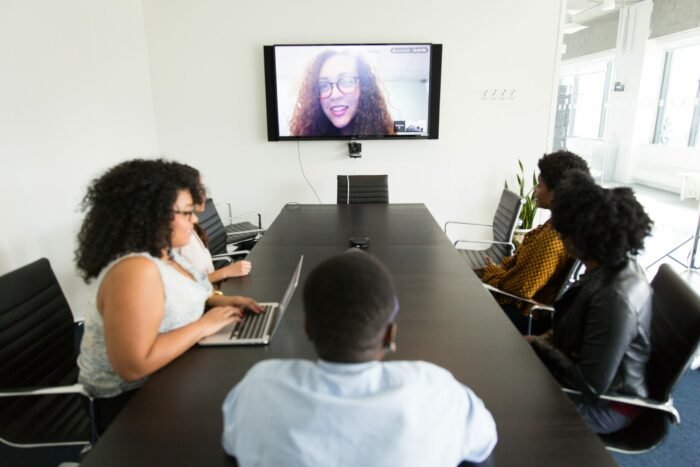


Remote work has gained popularity lately. It appeals to both employees and employers equally. COVID-19 rendered a majority of the workforce unable to travel to the workplace to curb the spread of the virus.
Before the pandemic, work from home was a fantasy to many professionals working full-time jobs. While remote work has served as an alternate work arrangement for employers and employees, all operations including recruitments, daily tasks, meetings and presentations are conducted virtually online.
Recruiting a suitable candidate for the vacant position is more than just filling up the role. Attracting and inviting talented individuals, selecting and onboarding the best candidate through a virtual process can be challenging.
We have researched and found that candidates with the following skills and traits remain committed and contribute towards organizational growth:
Exceptional Communication Skills
Staying in touch with the rest of the team when working remotely is very important. That is why the candidate should be familiar with common communication platforms such as e-mail, web conferencing, text messaging and more.
During the interview process, if the candidate is ready on time with the online set-up and showcases strong verbal communication skills it means that the candidate has taken time to go through the details of the interview process and is suitable for the role.
When a job seeker shows that he/she is available for communication post the interview process then he/she has minimal communication skills needed for remote work.
A prompt reply to email or text message also shows top-notch communication skills. Moreover, the error-free, concise and clear response shows exceptional communication skills. A candidate who is readily available for interaction during and after the interview possesses strong communication skills.
Written communication skills play a significant role in remote working because you will be mostly working through text messages or emails. You cannot have video conferences throughout the day simply because they are an inconvenience, time-consuming and do not offer flexibility.
Since the candidate is supposed to be writing a lot every day in terms of work, you should make sure they understand how to communicate in writing. The writing should be clear, concise and error-free because you wouldn’t want one comprehensive message over another while having piles of work.
Organisational Skills
When working at the office, employees constantly stay on top of their tasks. But when working remotely, no one visits the employee’s place for checking whether the employee is working on a track or not. Employees must keep themselves on track and perform their duties on a timely basis. But how would you find out if the job-seeking candidate has organisational skills?
You can ask the candidate about any experiences that required managing too many things and how the candidate coordinated everything. You may also ask for instances where the candidate has shown excellent organisation skills.
If organisation skills are a vital competency for the job role, then you can provide a task to the candidates to specifically assess their organisation skills.
Moreover, you can also assess the organisation skills of the potential candidate by including a test in the hiring process. You can ask the candidates to complete an immensely urgent task, which is quite large.
Also, assign them a deadline that’s shorter than the timelines given for usual tasks. Provide them instructions to keep track of time and ask them to send a sample on their working day. If you get a proper plan with stages showing work progress then you have found your perfect remote working employee.
Excellent Decision-making Skills
Nobody likes to be asked several questions about a task even after providing clear instructions. What if you hire a candidate who keeps sending you text messages even after explaining the task only because the candidate cannot make a simple decision?
You can assess the decision-making skills of the potential candidates by sending a test link that does not work because you removed one character from it. If a candidate finds the test online and submits it then the candidate possesses both problem-solving and decision-making skills.
Prioritisation Skills
When you assign daily tasks to the employees, they are supposed to manage their time and complete the task within the given timelines. Numerous tasks may come up every day which are equally important. When tasks are piling up, the employees should be able to gauge their importance and prioritize the most important tasks.
But the problem in remote working is that sometimes other things are equally important and it is hard to prioritise. The employee may have a medical emergency at home which is far more important than finishing the daily tasks. In such a case, the remote working employee should prioritise taking care of the medical emergency and then finishing off the task.
The inability to complete the task on time shouldn’t create gaps in work. Remote working employees should manage time and complete their tasks so that there are no gaps.
In these circumstances, you should also support your employees as their leader or mentor. You should assure them that you will support and help them if need be. They should know that they can count on you whenever needed.
You can also tell your remote working employees to inform you in case of such emergencies so that you can plan an effective way of completing the task on time.
Proactive and Self-Driven Personality
Only a self-motivated and driven person can handle the pressure of working remotely. People who cannot discipline themselves are not very efficient. Employers often look for individuals who are disciplined as well as talented. Lack of discipline in individuals leads to delayed work, below-average work or missed deadlines.
But how do you identify a proactive and self-driven person?
You can test whether candidates are proactive and self-driven by sending out mails of the interview during working hours. You also need to pay attention to whether the candidate’s working hours fall under the same time zone. See whether their responses are prompt or delayed. Also, check if they shared their ideas.
See how passionate they are towards their work because self-driven and proactive people are passionate about the things they do.
You can also ask them about their routine or schedule. You can ask how many hours they spend working on various tasks and how many tasks can be completed within a certain timeframe.
You may provide the candidates with a test period of a week or so and ask them for a realistic estimate. Based on the performance of the candidates, you can find out which position is more suitable for which candidate.
Reliability
Employees should be available for communication when working from home. Their work and status of the work must be visible to the employer.
Even if employees have a week’s time to finish a task, they should be available to take up any other responsibility and accept the additional pay.
Employees should be reliable and available for communication at the time of need. Whenever any urgent task comes up, a reliable employee should be available to accept the urgent task.
Moreover, it is vital for employees to be available for their team members. Employees should be team players and work together towards a common goal.
In case, a team member fails to complete a job on time, another team member should step up and complete the task on time while you reward them for being reliable and an excellent team player.
Attention To Detail And Accountability
Attention to detail is necessary for work and it is easy to spot. You can test the ability of the potential candidates by sending a small test with a lot of instructions.
Suppose you are hiring a freelance blog blogger to write blogs for you. You can write a long description with instructions on the style, length and tone of the blog. You can also add unusual demands like the alignment of images or type of images or formatting.
Once they finish their task you can check their attention to detail by comparing their blog with the instructions. You do not have to give them feedback on their writing but you can check the formatting and see if they send the task with clean formatting and visual appeal.
Employees are accountable for the work they deliver each day. At one point or another, you will have certain revisions or feedback for the work which needs to be changed or edited. Employers have certain expectations with their employees and it is the duty of the employees to meet those expectations. Employees should be accountable for their work and strive to meet the employer’s expectations by delivering error-free and quality work.
Time Management Skills
Time management requires tough mental preparation, discipline and dedication. While working remotely there would be no co-workers and bosses to remind employees to stay on track and complete the daily tasks.
Independent workers constitute a vital part of remote working teams. Employers usually look for candidates who can work independently without micromanagement. Employees who can manage their time effectively by scheduling meetings and working on regular timelines with no interventions are more productive.
Therefore, it is necessary to check whether the potential candidate has proper time management skills to work efficiently.
Technological Skills
A majority of the tasks for remote working employees require online tools, software and digital resources. Remote workers need technological skills even if the job is not a tech one. The candidates should be familiar with basic technicalities such as hardware, software, video conferencing, sending out emails, recording information in documents and excel sheets and other cloud-based tools.
However, if the job role requires other technical skills such as WordPress, HTML. C++ or any other program, then you can test the candidates on the same.
Furthermore, increased use of online resources for working risks the security of information. It is vital for employees to have basic knowledge of how online security works. Remote workers should have strong password-protected internet, anti-virus and other online quality security software installed.
You can just ask the potential candidates if they are familiar with these processes and hire someone who has these basic skills and experience.
Problem-solving Skills
Problem-solving skill is one of the most vital skills that recruiters look for in job seekers. Employers usually want their employees to know a majority of the specifications of the work. Training or coaching the new employees virtually is challenging and time-consuming.
When interviewing potential candidates, you can assess the problem-solving skills of a candidate online through a skills test suitable for the job role. This test should be tailored to test how the candidate would tackle any such problem in real life.
You need resourceful and tactful employees who can follow instructions but can also bring out something new with their work. They should be motivated to learn something new or solve a problem or find a new way of doing something.
Although it is not mandatory to test the problem-solving skills of potential candidates, still this skill comes in handy when working remotely. Virtual workspaces may facilitate smooth communication among the team members but the manager of other teammates might not always be available to answer queries.
Under these circumstances, the candidates should be able to think quickly and come up with a solution by themselves. It shows the resourcefulness and self-reliability of the candidates.
Remote work is going to be the future of traditional working in the post-pandemic world. Employees may not be working from home at all times but they won’t be working from the office every day either. The convenience and productivity of remote working have led to the rise of hybrid types of working where employees can work from the office or any other place.
Therefore, it is vital to understand how to assess and identify a suitable candidate during the hiring process online. Remote working requires the potential candidates to know and understand the changing digital culture and acquire skills that help them become better remote workers.